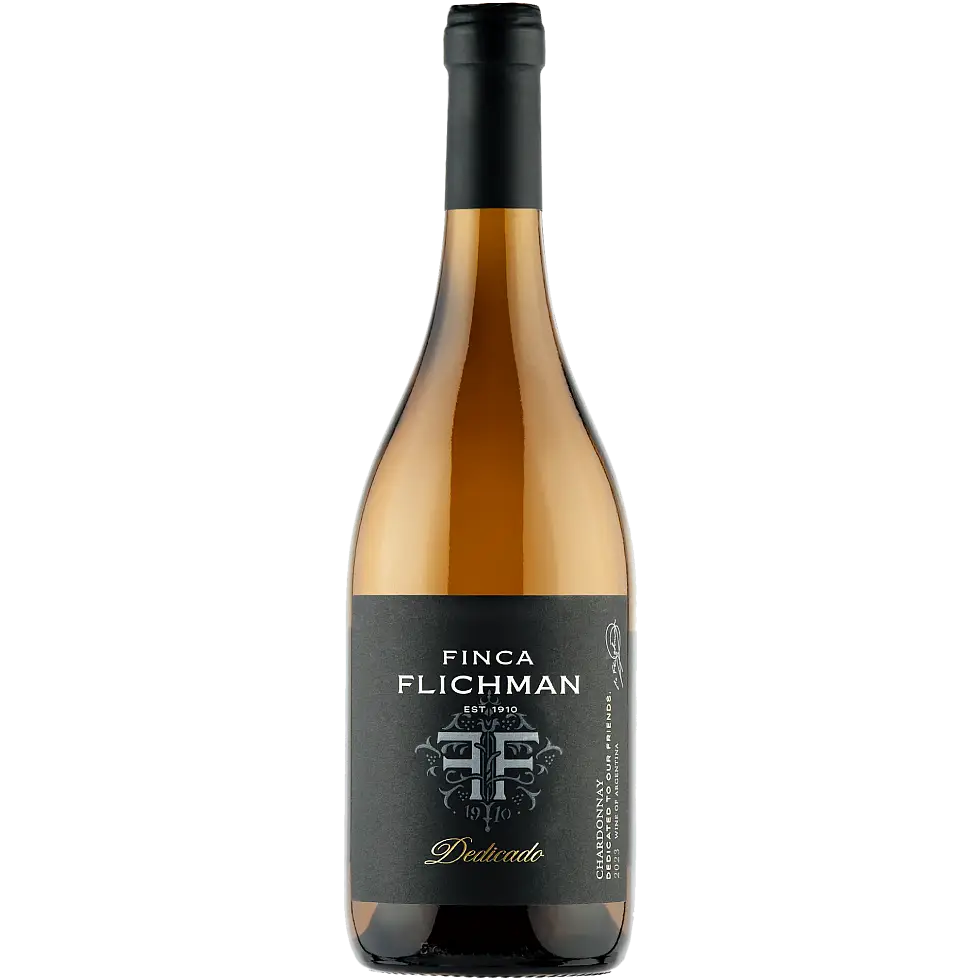
Finca Flichman, in southern Maipú, Mendoza, is one of Argentina’s oldest and most prestigious wineries. It was founded in 1910 by Don Sami Flichman, who emigrated to Argentina from Łódz, Poland and established the estate’s first vineyards on the rocky, well-drained plots within the town of Barrancas. In 1947, Don’s son Isaac and winemaker Raúl de la Mota created ‘Caballero de la Cepa’, one of the first premium Argentinian wines to have international success. Today, winemaking is overseen by Rogelio Rabino, supported by acclaimed consultant and winemaker Alberto Antonini, as well as renowned soil and vineyard mapping expert Pedro Parra.
Sogrape, owned by the Guedes family, purchased Finca Flichman in 1998, investing heavily in restoring the vineyards and modernising the winery. In addition to the original Barrancas vineyard, they also expanded to the higher elevations of Tupungato in the Uco Valley in Mendoza. At the foot of the Andes, these vineyards benefit from large diurnal temperature variations, resulting in longer ripening seasons and more elegant styles.
For decades, Finca Flichman’s best wine was guarded in the family cellar, and bottles were given only as gifts. Each had a handwritten label that read ‘dedicado a amigos’ (‘dedicated to friends’), which became the inspiration behind Finca Flichman’s flagship series ‘Dedicado’, made from the best, hand-harvested estate vineyards in the Uco Valley.
The Dedicado wines are made from the best hand-harvested fruit from the high-altitude Tupungato vineyards. Tupugnato is the northernmost sub-region of the Uco Valley in Mendoza, and sits at 1,300 metres above sea level. The grapes benefit from large diurnal temperature variations which result in a longer growing season. Pedro Parra, the renowned Chilean soil mapping expert, consults on these vineyards.
The wine was crafted from carefully selected lots that were hand-harvested before undergoing a 20-day fermentation in stainless-steel tanks at 15°C to preserve purity and freshness. Malolactic fermentation was intentionally avoided to retain natural acidity and a crisp profile. Ageing took place over 12 months, with 35% of the wine matured in new French oak to add structure and subtle complexity while maintaining balance and varietal clarity.