We were first introduced to the talented Serbian winemaker Kristina Lukić by Etienne de Montille (of Domaine de Montille), who insisted we try the excellent wines she makes at Vinarija Dalia. Kristina, who studied viticulture and oenology at the University of Udine, honed her craft across Europe, Chile, California and New Zealand before ultimately returning to her native Serbia. Here, she has helped inspire a revival of the country’s rich winemaking history (which dates back to the Neolithic period), particularly among her fellow female winemakers.
Dalia (derived from the Arabic for ‘grapevine’) was founded in 2021 as a collaboration between Kristina and a winery she’d previously consulted for, Vinarija Raj, in the Negotin Valley (Negotinska Krajina) of Eastern Serbia. A subregion of Timok, the Negotin Valley is close to the borders of both Bulgaria and Romania. The valley, described as a ‘treasure trove of modern Serbian wine’ by Caroline Gilby MW, enjoys a dry, sunny continental climate moderated by the Deli Jovan Mountain to the west and the Danube River to the east.
Kristina makes the Dalia wines in Vinarija Raj’s winery and sources most of her fruit from their organically farmed, nine-hectare vineyard. Planted on clay and limestone soils at an elevation of 150-200m, the vineyard boasts a wealth of international and native varieties, from Riesling, Gewürtztraminer, Gamay and Merlot to Bagrina, Smederevka, Prokupac, Začinak and Red Tamjanika. Vinarija Dalia also rent one hectare of Gamay vines and 0.8 hectares of Gewürztraminer in the village of Smedovac. This is one of few Serbian villages to have preserved its traditional 19th-century stone wine cellars, which were recently nominated for UNESCO World Heritage status.
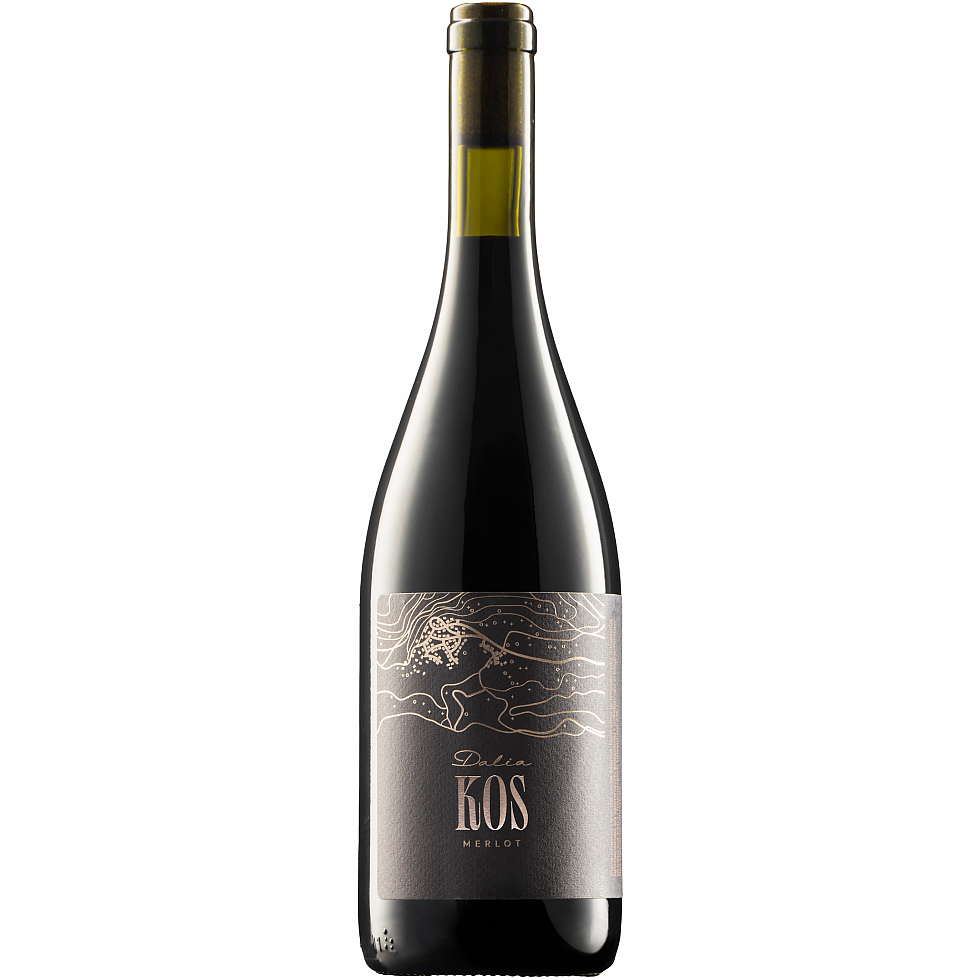
In the cellar, Kristina takes a minimal-intervention approach to winemaking, utilising indigenous yeasts, spontaneous fermentation, natural tartaric stabilisation and limited sulphur additions. The ‘Kos’ Merlot is named after the Serbian word for ‘blackbird’ and references this grape’s French origins (‘Merlot’ likely being derived from ‘merle’, French for blackbird). ‘Kos’ is made with 30% whole bunch fermentation to help enhance its vibrant, red fruit aromas. Ten months of ageing in Serbian acacia barrels and French oak result in a fine, well-structured red with vivid tannins and a hint of chocolate on the finish.