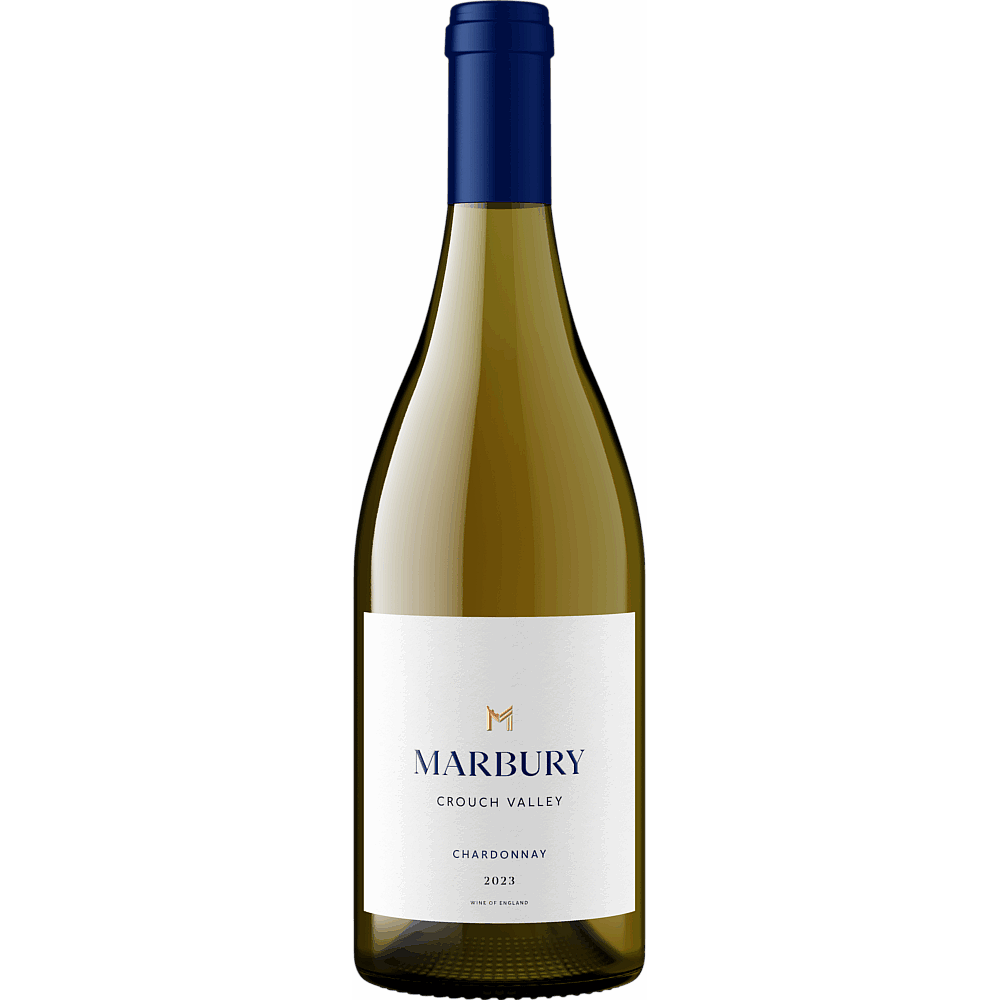
An exciting new project set in Essex’s Crouch Valley; Marbury is a testament to the bright future of English Chardonnay and Pinot Noir. Described by wine writer Tamlyn Currin as “England’s Côte d’Or”, the area is quickly gaining recognition as one of the finest sources of English still wine.
Marbury’s 24 hectares of vines are located just 10 miles from the North Sea, on the southern edge of the Crouch Valley above the estuary and marshlands. The area benefits from some of the warmest and driest conditions in the country. Prevailing west and south-westerly offshore winds frequently inhibit cloud formation. These longer sunshine hours, coupled with low rainfall levels, allow for an extended hang time to ripen the grapes. Even in challenging vintages, this singular microclimate provides optimal conditions for still wine production. London Clay is the predominant soil type here, known for its high ‘shrink swell’ capacity. This allows the soil to retain water during dry spells and become impermeable in periods of heavy rainfall, preventing berries from swelling and splitting post-veraison.
Renowned winemaker Charlie Holland has been instrumental in driving the quality of English wine in recent years, with a decade of experience at Gusbourne. He has led the winemaking and viticulture at Marbury since its inception, describing his approach in the cellar as ‘hands-off’ to retain a distinct sense of place. Judicious use of oak lends weight and complexity, framing the purity of fruit, which is central to Marbury’s style. The grapes are gently whole-bunch pressed and transferred directly to barriques (15% new) without any settling or sulphur for fermentation and ageing. Their maiden release is elegant and poised with notes of apple blossom, oyster shell and toasted hazelnut. It marries racy acidity with silky texture and depth.
Perched above the River Crouch estuary where it meets the North Sea, this historic vineyard sits on land that has cultivated grapes for over 1,000 years. The site benefits from England’s warmest and driest growing season climate, with distinctive coastal conditions featuring long sunshine hours, extended autumn light, and critically low September-October rainfall that allows extended hang-time for optimal ripening. The challenging London Clay soils, while historically poor for agriculture, prove exceptional for viticulture through their high smectite content, which provides excellent water retention during drought and prevents berry swelling during late-season rains. This unique site has established the region as England’s premier still wine area, with a proven track record of fully ripening grapes even in the most difficult vintages.
The 2023 vintage began with a cool and wet spring, with bud burst occurring in mid-April followed by flowering in the first week of June. Cool conditions persisted throughout early summer, creating challenges for vine development before a welcome shift to sunny and warm weather in late summer and early autumn. This extended period of favourable conditions allowed the vines to fully ripen a larger than average crop, though harvest dates were pushed into late October to provide the essential hang time needed for optimal fruit maturity.